
Why Walking Is Your Best Tool After Retirement
How regular walking improves fitness, mood, and social connections. Simple routines that actually stick.

Here's the thing about retirement — you've got time. More time than you've had in decades. But having time and knowing what to do with it are two different things. Walking isn't fancy or complicated. It won't require expensive equipment or a gym membership. But it might be the single most powerful tool you've got for staying healthy, feeling good, and staying connected to people around you.
We're not talking about marathon training or power-walking competitions. Just regular, consistent walking. The kind you can do in your neighborhood, along the coast, or through a local park. The kind that fits into your life without demanding anything from you.
What Walking Actually Does for Your Body
Your body changes after you stop working. That's just biology. You're probably less active than you were during your career, sitting more, moving less throughout the day. Walking reverses that trend in ways that feel natural, not forced.
Walking strengthens your cardiovascular system. Your heart gets more efficient. Your blood pressure stabilizes. Your joints stay flexible — especially important if you're starting to feel stiffness in the mornings. You're also building bone density, which matters a lot as you get older. Falls become less dangerous when your bones are stronger.
But there's more happening than just physical changes. Walking boosts your metabolism. It helps you sleep better at night. Your energy levels stabilize instead of crashing midday. Most people notice they feel less achy and stiff after they've been walking regularly for about 3-4 weeks.
The key detail: You don't need to walk fast or far. A steady pace of 3-4 kilometers per hour, 30 minutes a day, 4-5 days a week — that's enough to create real physiological change.


The Mental Health Shift Nobody Talks About
Retirement can be confusing emotionally. You've spent 40+ years with a clear structure — work defines a big part of who you are. When that's gone, it's natural to feel a bit lost. Walking helps more than you'd expect.
The combination of movement, fresh air, and time alone with your thoughts creates space for your mind to settle. You're not sitting at home overthinking things. You're doing something, moving forward literally and figuratively. It sounds simple, but this matters.
Regular walkers report better mood, less anxiety, and fewer depressive symptoms. You're getting sunlight exposure, which regulates your circadian rhythm and boosts serotonin. You're moving your body, which releases endorphins. These aren't small effects — they're measurable, real changes in brain chemistry.

Building a Walking Routine That Actually Sticks
The problem with most fitness advice is it assumes you want something dramatic. A complete lifestyle overhaul. That's why most people quit. You don't need drama. You need something realistic that fits your actual life.
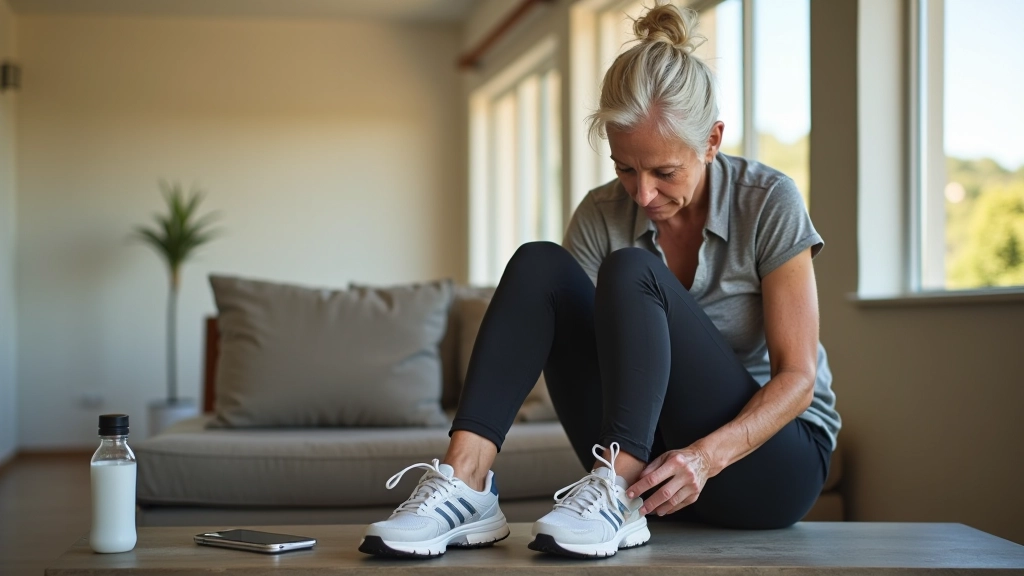
Start small. Not "I'm going to walk 10 kilometers daily." Start with 15-20 minutes, three times a week. Same time each day if possible — morning works well for most people, but pick whatever fits you. The same-time-every-day part is crucial. It becomes a habit, not something you have to negotiate with yourself about.
Pick a route you actually like. Not the "healthiest" or "most challenging" route. The one you enjoy. If you live near the coast, great. If it's a neighborhood with trees, that works. If it's a shopping district where you see people, fine. You're more likely to do something you find pleasant than something you think you "should" do.
Track it loosely. Not obsessively. A calendar on the wall where you mark off the days you walked. Just enough to see the pattern building. After four weeks, you'll have evidence that you're doing this. That matters.
Important note: This article is informational and educational in nature. Walking is a healthy activity for most people, but everyone's circumstances are different. If you have specific health conditions, joint pain, balance issues, or haven't been active in a long time, consult with your doctor before starting any new walking routine. Your healthcare provider can give you personalized guidance based on your actual health situation.
The Real Bottom Line
Walking isn't a solution to everything. But it's a tool that works. It improves your physical health. It steadies your mental state. It connects you to other people and gives your days structure. It costs nothing. It doesn't require equipment or special skills. It works whether you're in Portugal, anywhere else — doesn't matter.
The hardest part isn't the walking itself. It's starting. Pick a time tomorrow. Walk for 20 minutes. See how you feel. Do it again in two days. By week three, you'll feel the difference. By week eight, you'll wonder how you ever lived without it.
Retirement gives you something work never did — the freedom to move at your own pace. Walking is how you use that freedom.

Related Articles